


Seeing the Whole Picture: The Meaning of a Holistic Approach in Education
At Millennium World School, a leading CBSE school in Bangalore, we believe in fostering a well-rounded educational experience. We go beyond traditional academics to embrace a holistic approach that considers the complete development of each student. What is a Holistic Approach in Education? A holistic approach in education moves away from compartmentalized learning. It acknowledges that a child’s intellectual, social, emotional, physical, and even spiritual well-being are inter connected and all influence the learning process. The Benefits of a Holistic Approach By nurturing all aspects of a student’s development, we: How We Implement a Holistic Approach at Millennium World School Here are some examples of how we integrate a holistic approach into our curriculum: Registration Open for the 2024-2025 Academic Year Millennium World School is committed to nurturing the whole student. We invite you to learn more about our holistic approach to education and explore registration for the 2024-2025 academic year. Together, let’s create a learning environment that empowers each student to flourish
Reimagining Education: How the 5C’s Framework is Shaping Schools in Bangalore (2024-2025)
The landscape of education is undergoing a significant shift. Gone are the days of rote memorization and standardized tests. Today, schools in Bangalore, like the ones highlighted on mwsblr.com, are embracing a more holistic approach, focusing on preparing students for a dynamic future. This is where the 5C’s framework comes in – a transformative concept that reimagines education for the 21st century, with registrations open for the 2024-2025 academic year. What are the 5C’s? The 5C’s framework emphasizes five key competencies crucial for success in the modern world: Transforming Education in Bangalore Bangalore’s forward-thinking schools are integrating the 5C’s into their curriculum, fostering a learning environment that goes beyond textbooks. Here’s how: Benefits for Students in 2024-2025 By embracing the 5C’s, Bangalore schools are preparing students not just for academic success, but for life beyond the classroom. Here’s what students gain: The 5C’s framework offers a compelling vision for education in Bangalore. By integrating these crucial competencies into the curriculum, schools (like the ones on mwsblr.com) are preparing students to become well-rounded individuals, critical thinkers, and effective communicators – ready to tackle the challenges and opportunities of the 21st century. As registrations open for the 2024-2025 academic year, consider how this innovative approach can empower your child to thrive in a world brimming with possibilities.
Navigate Parenthood with Confidence: Finding Effective Parenting Workshops in Bangalore (2024-2025)
Raising a child is an incredible journey, but it can also be overwhelming. New challenges arise at every stage, and sometimes you just need a little guidance. Parenting workshops offer a fantastic opportunity to connect with other parents, learn valuable skills, and gain fresh perspectives. This article empowers parents in Bangalore to find the perfect parenting workshops for the 2024-2025 academic year. What to Look for in a Parenting Workshop: Additional Tips: By following these tips, Bangalore parents can embark on a rewarding journey of finding the perfect parenting workshops to equip them with the knowledge and skills to navigate parenthood effectively in the 2024-2025 academic year. Remember, empowered parents raise confident and well-adjusted children.
Fostering Young Minds Together: Exploring Collaborative Learning in the Classroom
The traditional model of education, where a teacher stands at the front of the class imparting knowledge, is evolving. Today, educators are embracing collaborative learning, a powerful approach that harnesses the collective intelligence of students to create a dynamic and engaging learning environment. This article delves into the benefits of collaborative learning and explores its potential in CBSE classrooms, particularly for the upcoming academic year 2024-2025 (as highlighted on the website mwsblr.com). What is Collaborative Learning? Collaborative learning involves students working together in small groups to achieve a common goal. This might involve group discussions, projects, problem-solving exercises, or presentations. Through collaboration, students: Benefits for CBSE Schools in 2024-2025 The CBSE curriculum, emphasizing holistic development, aligns perfectly with collaborative learning. Here’s how CBSE schools can leverage this approach in the 2024-2025 academic year: Getting Started with Collaborative Learning Collaborative learning offers a compelling approach to enhance student engagement and learning in CBSE classrooms. By embracing this strategy for the 2024-2025 academic year, schools can empower students to become active participants in their learning journey, fostering not just academic excellence, but also well-rounded, collaborative individuals ready to thrive in the future.
Understanding the Holistic Approach to Education: Nurturing Well-Rounded Individuals
Education has traditionally focused on academic achievement, measured by test scores and grades. However, in today’s world, a more comprehensive approach is gaining momentum: the holistic approach. What is a Holistic Approach to Education? A holistic approach to education goes beyond academics. It aims to develop the whole child, nurturing their intellectual, social, emotional, physical, and creative abilities. This well-rounded development prepares students to be not just successful students, but also successful and fulfilled individuals. Key Aspects of a Holistic Approach The Benefits of a Holistic Approach Studies have shown that students who experience a holistic education are better prepared for college and future careers. They are also more likely to be: The holistic approach to education is gaining traction as educators recognize the importance of nurturing the whole child. By providing a well-rounded learning experience, schools can prepare students to not only succeed academically but also thrive in all aspects of life.
Fostering Compassion: How to Create an Empathy-Inclusive School Environment
Schools have the power to shape young minds not just academically, but also socially and emotionally. In today’s diverse world, fostering empathy in students is crucial. An empathy-inclusive school environment allows students to thrive, building strong relationships and becoming well-rounded individuals. Why Empathy Matters Empathy is the ability to understand and share the feelings of others. It fosters kindness, reduces bullying, and promotes a sense of belonging for all students. Students who practice empathy are more likely to: Building Empathy in Schools Creating an empathy-inclusive environment requires a multi-pronged approach. Here are some key strategies: Schools that prioritize empathy create a positive and supportive learning environment. Students who feel valued and understood are more likely to be engaged and successful. The benefits of empathy extend beyond the classroom. When students become empathetic individuals, they contribute to a more compassionate and inclusive world. By fostering empathy, schools can equip students with the social and emotional skills they need to not only succeed academically, but also become kind, responsible, and caring citizens.
What is neuroscience based learning?
Neuroscience based learning is the application of scientific insights from the study of the brain and nervous system to the field of education and learning. It aims to understand how the brain processes, stores, and retrieves information, and how to optimize these functions for better learning outcomes.
Effective Parenting Style for Gen Alpha

Gen Alpha is the term used to describe the generation of children born after 2010. They are the first generation to grow up with smartphones, tablets, and social media as part of their everyday life
What are the difficulties of parents of gen alpha?
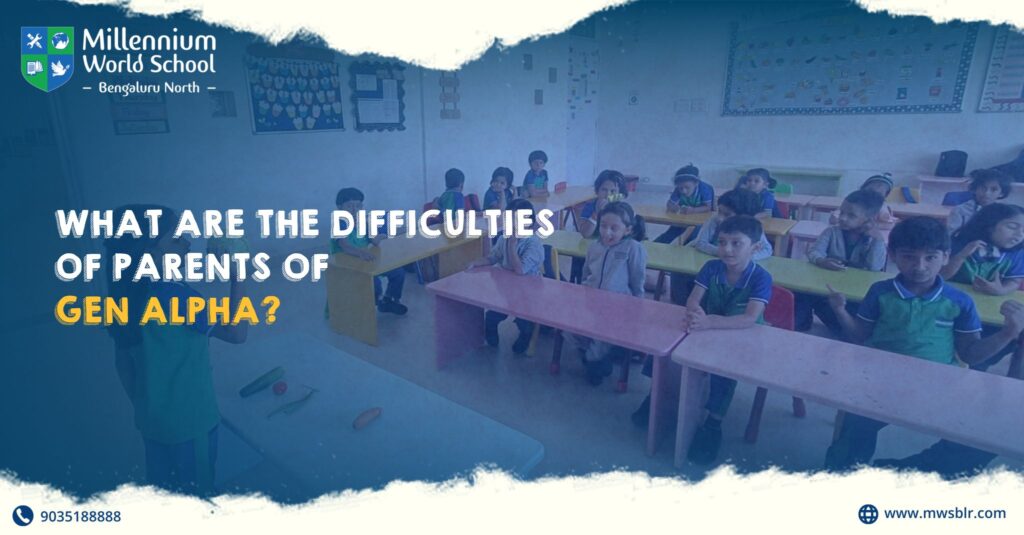
The term “generation alpha” refers to the group of children born after 2010 who are experiencing issues related to the environment, social media, and digital technology. They are also known as the iGeneration, the Plurals, or the Centennials
What Should Gen Alpha Learn in Schools?
In this blog, we will explore some of the insights from neuroscience that can help us answer these questions.